Monday, October 10, 2011

Territorial Army in all 222 Constituencies by year-end

The Borneo Post (Monday, 10/10/2011, pg.A5)


KUALA LUMPUR: All 222 parlimentary constituencies nationwide will have a Territorial Army company by year-end, said Defence Minister Datuk Seri Dr Ahmad Zahid Hamidi.

He said so far, the Territorial Army had been set up in 207 parlimentary constituencies with a total strength of 87,000 members.

"We have yet to set it up in another 15 constituencies and we aim to achieve the target, which is also a Key Performance Indicator, before this Dec 31," he said after opening a carnival here.


So, this will for surely strengthen our nation defence...

Sunday, October 9, 2011

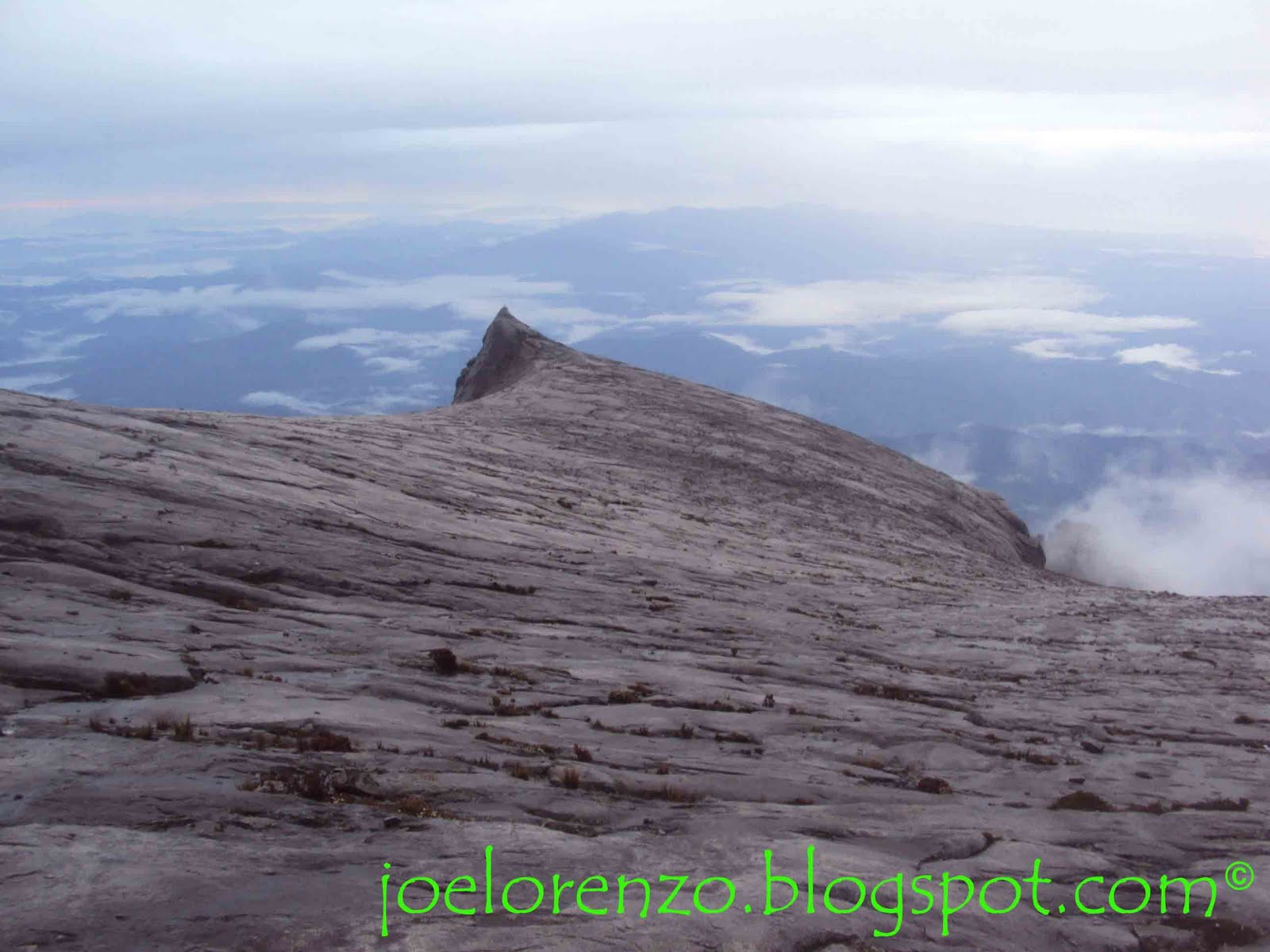
The Peaks of Mount Kinabalu

By Joseph Pirin


Hurrahh!!!

In this post, I wanted to share with you a collection of picture taken by myself during my successful Mt.Kinabalu Expedition 6 months ago, in April 2011. Ehh? Why now? Haha...coz I'm so busy this few month with a lot of project and only got a chance to dig up my photo archive recently. Apart from that, I'm also keen on to show you on how to identify any of the peaks up there... hehehe...

If you haven't noticed, actually each of the peaks had a special feature on it. So, it's simple for you to recognize it whenever you're going up there again to refresh and feel the spectacular views of Mt.Kinabalu itself....

Indeed, there are over 20 peaks waiting on the top of Mt.Kinabalu to be conquered. Although Mt.Kinabalu seems to have a plenty of peak up there, some peaks is considered as inaccessible to any but winged animals. Even for an experienced climbers, it require a highly rock climbing skills, equipments and super fitness.

Here are some pictures of the peaks that I had taken.

The Summit Plateau of Mt.Kinabalu


Low's Peak

The Highest Point, Low's Peak (4095.2 m)
  • Low's Peak is commonly used by tourist...
  • This peak is quite simple to identify by only looking for the highest peak when you're standing on the summit plateau...
  • Just let your eyeballs follow the white rope to be easy for you to recognize it. (Coz it heading towards the Low's Peak)
  • The summit are usually crowded with mountaineers...This might help you.

Victoria Peak

Victoria Peak (4091 m)
  • (western plateau)
  • This peak is on the right side of Dewali Pinnacles.
  • Its the peak with a little horn or stub sticking out. You will get noticed this for sure!
  • Some people said that this peak is the actual highest point of Mt.Kinabalu because of its horn. But true or false...It's obvious to know that it impossible to reach the peak as I told you earlier,inaccessible to any but winged animals.
  • Some source shows that the elevation of Victoria Peak is 4090m, while some others put 4091m... I'm also found an article stated the elevation as 4094m which is apparently so close with the highest point of Mt.Kinabalu, Low's Peak. Hmmm...
  • In reality, it never been officially recognized and published as the highest peak of Mt.Kinabalu.

Oyayubi Iwu Peak, Alexandra Peak & Dewali Pinnacles
(I called it as 3-in-1 Peak, all 3 Peaks visible in one area of sighting)


Alexandria Peak (Alexandra???)

Alexandria Peak (4003 m)
  • (western plateau)
  • Easy to see this as 3-in-1 peak... (Coz Alexandria Peak, Oyayubi Iwu Peak & Dewali Pinnacles placed at the same area of sighting!)
  • This peak is on the left side.

Oyayubi Iwu Peak

Oyayubi Iwu Peak (3975.8 m)
  • (western plateau)
  • Easy to see this as 3-in-1 peak... (Coz Alexandria Peak, Oyayubi Iwu Peak & Dewali Pinnacles placed at the same area of sighting!)
  • This peak is just in front of the Alexandria Peak.
  • Sticking out in front of it looking like a thumb; the name Oyayubi itself is a japanese word for thumb.
  • If you can see the small white spot (Gurkha Hut), it just located below the Oyayubi Iwu Peak.

Dewali Pinnacles

Dewali Pinnacles of Mt.Kinabalu
  • Easy to see this as 3-in-1 peak... (Coz Alexandra Peak, Oyayubi Iwu Peak & Dewali Pinnacles placed at the same area of sighting!)
  • It's on the right side.
  • You will get notice this, "The rock with many peaks". That's why it being called Pinnacles...

King Edward Peak

King Edward Peak (4086 tm)
  • (eastern plateau)
  • This peak is located on the eastern plateau.

Low's Gully

Low's Gully (about 1800m deep)
  • Ehh?? I thought this cover only peaks? Hahaha...just let this be...I got a pretty picture for it in my collection so i just add it...peace...
  • This gully is about 1800m deep, maybe even deeper...have you seen the spectacular waterfall when you passed the KK-TAWAU highway? The waterfall maybe situated here...

Ugly Sisters Peak

Ugly Sisters Peak (4032 m)
  • (eastern plateau)
  • This peak is on the left side of Donkey Ears Peak. It is easily to recognize this after you recognize the Donkey Ears Peak first.
  • Is it an ugly peak to you?!! I don't see anything ugly on it! Hmmm...

Donkey Ears Peak

Donkey Ears Peak (4054 m)
  • (eastern plateau)
  • This is one of the unique peak on top of Mt.Kinabalu.
  • You can easily recognize this peak by its distinctive shape that looks like a donkey ears from a certain angle. (A twin peak)

St. John Peak

St. John Peak (4091 m)
  • (western plateau)
  • This is also one of the unique peak on top of Mt.Kinabalu.
  • Some peoples say, you can see an orang utan's face on it?! Hmm...
  • While some local legend among the people of Ranau, has it that St. John's Peak was the stone which his body was turned into. Hmmm....nahh, just let it become a mystery ;p

South Peak

Puncak Seringgit a.k.a The South Peak (3922 m)
  • (western plateau)
  • This is perhaps the most glamorous peak of Mt.Kinabalu even surpassing the Low's Peak itself.
  • You know why?! Despite its too common name, it is also called as Puncak Seringgit by the local Guides & Porters (I heard when they keep telling me to search for Puncak Seringgit when I'm going up (a morning after) while I'm taking my rest at Layang2 Hut)...hehehe...
  • It images is widespread all around Malaysia, Its on the RM1 note...

Tunku Abdul Rahman Peak

Tunku Abdul Rahman Peak (3948 m)
  • (eastern plateau)
  • It is the first peak that you can see on the Right side of you after you passed through the Sayat-Sayat Checkpoint.
  • By viewing from the summit plateau, you can easily see this by looking for Sayat-Sayat Hut.

Commando Cauldron

Commando Cauldron (Gap in between)
  • (eastern plateau)
  • Not a peak, but it is the entrance to the abyss of Low's Gully.
  • It is easy to look for this, look for a U-shape between Donkey Ears Peak and Tunku Abdul Rahman Peak.
  • Also called as Cauldron Gap.
  • In picture above, the gap between Donkey Ears Peak and Tunku Abdul Rahman Peak is the Commando Cauldron.

and this is??? Haha...This is The South Peak, taken from different angle


Not discussed Peak:
(As a result of, No available photo in collection...wuwuwu~_~)

West Peak
St. Andrew Peak
King George Peak (eastern plateau)
Phallus Peak
North Peak
Mesilau Peak (eastern plateau)
Tsukushi Peak (western plateau)

Mushroom Peak

Lion Heads Peak

Echoing Rocks Peak

Mekado Pinnacles

& some other no name peaks...


p/s: Note that there is still many peaks that has no name, maybe it does have but unfortunately unknown publicly...or in a more simple meaning, i don't know!!! ;p


If you had noticed...I'm repeatedly using a sentences twice. For your information, it is actually a quote;

"inaccessible to any but winged animals"
(Sir Hugh Low, 1851)

- It generally explains the reason why he did not scale the mountain's highest peak in 1851. Although he is well-known as the first recorded person to climb the mountain, he is only manage to scale the summit plateau.


If you have a suggestion, addition or correction; please let me know kio... ^_^
sharing is caring.....

Related Post :
ROTU UMS Mount Kinabalu Expedition

Friday, October 7, 2011

A Recollection of The Past

The old look of my website...


Today is a very historical day for me, as I'm going to re-branding my website. Its been 3 years since I had started to write online in June 2009, haha...?? Who even cares? I ain't got a lot of readers or visitors to my site even a thousand hits afterall, well, that's not actually my objective. Sometimes, I write just for fun. It is more likely an online diary where everyone can see; even commenting on it. But it is indeed in a more modernized and profesional concept, based on my understanding lah...hehe..

It's no doubt that I'm going to change the tagline of my website from "Fit For Any Profession" to "A Recollection of The Past". It is generally because the previous tagline seems to be not fascinating to me any longer, and may also because; since i'm already working, thus, i guess that i should branding my website to a new fresh one. The old look is seemingly too outdated and not even very informative to read. Just a piece of junk as what I'm thinking about it...haha...but i'm surely not goin' to delete the old post. Just let it be there!!!......

Basically, I'd not interested in having my own domain for my website. its not the matter of Why?, it is the matter of what for?! I'm know how to do it, I had being studying the web developing for a quite sometime ago, but, as I told you before, sometimes, I'm only write just for fun. This blogspot is free to use and the only reason I'd develope this webpage is just for me to fill-in the time whenever I felt like boring or got nothin' to do. I'm not even interested in getting some additional money through online advertisement or something like that. This website perhaps is an attempt to recollect the past records, documents, events, for my own future views.

In this website, the main ideas on what i'm going to share here is divided into two types; The main idea is "A Recollection of The Past". That means anything that happen in the past is what i'm intend to write and post here. First, of course, my personal records, experiences, researches, studies and so forth (My Annual Report). Its the Same like what other major companies in the world do annually, am I right?! hehehe... Second, is more likely a general history knowledge focusing on my native ethnic history and its legacy, my village long history and also Sabah history that a long time ago known as North Borneo.

One might wonder why I'm so enthusiast in recollecting the past history of all things that connected to me? The answer is simple, it is to know the actual truth behind all the story rumoured around me in this few years, at the same time, provide the information to all my readers.

Sharing is Caring...

As I'd recall, there is no written history of the Dusunic peoples in Sabah before the appearance of colonial powers to Sabah in 19th century. Maybe there is some exist in Brunei Sultanate archive or in Sulu Sultanate archive prior to 18th century.

I'd like to share a quote from Owen Rutter;


"This I tried to record, in the hope that it may form the basis of a more detailed study and that someone coming after me may stand on the shoulders of this book and see more than I."

(Owen Rutter, 1929(pg.12); in his very own book entitled The Pagans of North Borneo)

~The book is among the earliest documented account of written history about the Dusuns.


So, all of the writings that i'd posted here is about quotes, excerpts, researches and studies about what I'm interested with...apart from my life documentary...hehe....Ok, thats all for today!


Bye~~~

Sunday, October 2, 2011

Watu Tinuridung of Sunsuron

Ever heard about this menhir (stone monument) before? The story behind it are fading with time. So, let us read some literature review on the above topic... There were indeed some writings exist, an excerpt from the past.

This is what I'm found, an excerpt from one of my favourite book collection entitled Traditional Stones and Wood Monuments of Sabah by Peter R. Phelan in 1997. It tells perhaps a complete history about Watu Tinuridung of Sunsuron, also includes an alternate story version by Pius Kating in 1989.

The excerpt in the book is as follows;

Watu Tinuridung at Sunsuron Village


There is a large stone standing in the middle of Sunsuron Village in Tambunan known as Watu Tinudirung. The top of this menhir is 2.13m high; its base is 2.18m across and it has an average thickness of 23 cm. In the 1970's when the population of Kampung Sunsuron had grown too large to be administrated by one Ketua Kampung (headman), it was decided to form two villages for administrative purposes; one half became known as Sunsuron Ulu and the other as Sunsuron Laut, each with its own headman. The dividing mark between the present two kampung is Watu Tinuridung.

According to the local oral tradition in Kampung Sunsuron, the origin of the stone dates back to the Mat Salleh period. In 1898, a truce between British North Borneo and Mat Salleh was agreed to. As part of the agreement Mat Salleh was stay in Tambunan. According to local comment in Sunsuron, Mat Salleh first came to Kampung Kirokot and after a short stay there he settled at Kampung Tibabar in the centre of Tambunan plain. He visited Kampung Sunsuron and ordered the peoples there to follow his laws, threatening oppositon with fines and punishment. The peoples of Sunsuron decided not to bow to this threat and prepared to defend themselves. They dug a circular hollowed-out area and used the earth to erect ramparts around it. The depth of the excavated area was such that a man standing inside it could not be seen from the outside. The defensive site was circular in shape and is said to have had a circumference of 40m. While digging they came upon a large flat stone. They dug the earth all around it in order to remove the stone. When they saw the shape of the stone, they decided to put it standing. All the people of Kampung Sunsuron cooperated to erect the stone. In the local dialect, the action of erecting something is monuridung and it is from this verb that the stone got its name Tinuridung.

After the stone had been erected, two priestesses (bobolian) performed a ceremony "in order to bring to life the spirit of the stone". The names of the two priestesses are still remembered; Yundiai and Kubioh. There were male bobolian present also but the two women were the main functionaries. The purpose of having a spirit living in the stone was to keep away from the village any sickness or disease and also any fightingin which sharp instruments would be used. As part of the ceremony, a pig was sacrificed. Lustral water, known locally as popodsu' was poured on the stone and also sprinkled on all those present at the ceremony.

At the present time it is believed by at least some of the people of Kampung Sunsuron that the spirit is still in the stone and this spirit is considered to be a good or friendly one. however, the spirit does not receive any special respect or attention any more. One of the reasons suggested for this fact is that the two priestesses who performed the initiating ceremony are no longer alive.

Soon after the stone had been erected, Mat Salleh came again to Kampung Sunsuron and demanded seven buffaloes from the villagers. Mat Salleh picked out a man named Gadog and asked him to hand over a buffalo. Gadog was unwilling to comply with the order, and furthermore, encouraged the rest of the people to oppose the demand. Mat Salleh could not hide his anger when he noted this action of Gadog. He left, but that night under cover of darkness he returned to invade the newly-built fort.

The people of Kampung Sunsuron had suspected that Mat Salleh and his followers would make an attack and they decided on an unusual plan of action. They left the fortification undefended but hid themselves all around the fort. Mat Salleh and his men came, found the entrance unlocked and entered. When they were inside the people of Kampung Sunsuron locked the door and had the enemy trapped inside. For three days they were unable to leave and during this time they had little of no food supplies or water. On the night of the third day, they managed to climb out and they disappeared in the darkness. Then Mat Salleh set up a post on the top of a nearby hill called Kimatan. From there he started firing a cannon at the fort in Kampung Sunsuron. It so happened that the cannon exploded and parts of it fell down the hill to a place called Goingki which is about 1km from the site of Watu Tinuridung. Years later a man named Gundalon came upon parts of the cannon when he was clearing some land in that area for hill-padi. He used the material of the cannon to make rungs worn by women round the waist as part of Kadazan traditional costume.

The struggle against Mat Salleh continued. He had his main fort at Tibabar. Finally with the arrival of the government forces Mat Salleh was defeated and peace returned to the area. Because of the events connected with Watu Tinuridung and particularly because of the deaths of several men in defence of Kampung Sunsuron, the stone is revered as a momorial to the bravery of the people of that period (Marcella Moini Gubau, pers.comm. 1988).

Another account (Kating 1989:61) of the menhir in Sunsuron traces its origin to a man of exceptional strength and size who took refuge in Sunsuron. Although at first the people received him well, they could not keep him for long because there was not enough food to feed him and he was a very lazy fellow who refused to work. Eventually he was told to leave. Before leaving, however, he took a huge rock from the Sunsuron river and placed it in the middle of the village, as a gesture of gratitude. He said the villagers couldtake cover behind the rock should a war break out. the big rock can still be seen in Sunsuron, and was apparently used as a shield against the battle of Mat Salleh's guns during the rebellion (Kating,1989).


  • Credited to Phelan, P.R. 1997. Traditional Stones and Wood Monuments of Sabah. Pusat Kajian Borneo (Centre for Borneo Studies), Yayasan Sabah, Kota Kinabalu, Sabah, Malaysia. chapter 6 - Memorial Stones of Notable Events.p.69-71.

p/s : There were a lot more history about other stone monument & wood monument all around Sabah. To know more about it, buy the book at any available book store. ~But I guess this book is quite rare to be found nowadays...don't know why! Maybe out of print....Hmm...
Just give it a try...

Saturday, September 24, 2011

The Sunsuron Guritom

The Sunsuron Guritom
By Joseph Pirin


Figure.1 The Sunsuron Guritom as can be seen today.
Picture taken on 02.09.2011 –author copyright-

Guritom is a special name, the one and only. It is the term used to describe the box-like concrete structure that exists in the Sunsuron Village. A special name spoken for the house of skull, exclusively for the people of Sunsuron. Meanwhile, skull-house in Karanaan Village is called as Tugu Peringatan Tengkorak and skull-house in Tibabar Village is called as Rumah Bangkawang. As the time goes on, the world rapidly changing due to the growing modernization. This is also effect the Dusun community in Sunsuron thus, leaving the Guritom merely as a legacy of the Kadazandusun head-hunting past.


Figure.2 The aerial view of Sunsuron village.
RED CIRCLE in the picture shows the location of the Guritom
Source: gambaris.com

The story behind the Sunsuron Guritom is absolutely related to Head-hunting. The practice of Head-hunting is either because of religious motive, territorial defence and prestige (New Sabah Times, 2009). Well, in the case of my village, Sunsuron, the head-hunting might happen because of territorial defence. Based on the village elders oral-story, most of the head collected during the Mat Salleh’s last battle in Tambunan plain.

So, let’s us review the history for a moment...

The Tambunan plain, a most pleasant and beautiful place, was at the time outside the Company’s rule. The two main tribes, the Tegas and Tiawans, were enemies. Mat Salleh took the side of the Tegas against the Tiawans. He taxed the people to support himself and his band and he built a fort with forced labour. Beaufort, the Governor, did not like this and tried to get Mat Salleh out of Tambunan. He said the government might help him to make a pilgrimage to Mecca, but Mat Salleh refused this help. The Tiawans did not like the state of things either, and they asked Beaufort to set up a Government station at Tambunan. Senior government officers did not like it either. They shook their head and said that before long Mat Salleh would be on the warpath again. They were right. (Whelan, 1968)

At the heat of tension between Mat Salleh and the Company, Mat Salleh starts his first major attack against the Tiawans. Sunsuron is one of the Tiawans.

At the head of group of Tegas, Mat Salleh attack the Sunsurons and killed thirty people and drove off eighty heads of cattle. He went to Lawas in Sarawak to buy gunpowder. He had plans to raid Keningau. He attacked the Tiawans at Tambunan, swooped down as far as Putatan in a raid, and, at a meeting with Resident Little near Papar, demanded that the Company should take away its officers in Tambunan. The raids went on. (Whelan, 1968).


-time skipped-


On December 18th 1899, the Government forces under Captain Harrington, the police commandant, advanced towards Tambunan. They arrived on December 31st 1899 after a few brushes with Mat Salleh’s Troops. They numbered one hundred and forty in all and had a seven-pounder gun and a machine gun. With Harrington were Dansey, Fraser, Dunlop, Atkinson and Conyngham. Dansey was a police officer and Conyngham was a doctor. Harrington set up his headquarters at Timbou, two and a half miles from Tambunan. (Whelan, 1968).

The battle continues. During this war, the Tiawans also join the battle including the Sunsuron warriors. The North Borneo Armed Constabulary subsequently had captured Mat Salleh last fort in Toboh. Mat Salleh was shot dead on January 31st 1900, thus, ending the reign of Mat Salleh rebellion.

“During this war, the fighting men of Sunsuron collected heads of enemies killed in battle.”
(Phelan, 1994)


For the Sunsuron villagers, the Guritom was made to commemorate the Sunsuron Dusun warriors who had given their life in order to protect their village from external threat at the past century, besides its main purpose as a house of skulls. The memory of the Mat Salleh era in Tambunan survives in the oral tradition of the people.

As you can understand, any history books or historical records and documents are written by different individual with different perspective. So, different references might give different stories...This story of mine is based on what I know and studied. It’s up to you to judge the truth. No offence, no hard feeling...OK... peace ;p


A book entitled Head-Hunting and the Magang Ceremony in Sabah written by Peter R. Phelan that first published in 1994 tells some documented history behind the Guritom of Kg.Sunsuron. The Guritom is to be said had first erected in 1959.

The subject of making a concrete structure to place the skulls came after because of the previous wooden head-house is costly as it was replaced several times due to its material that did not last. So, the villagers start to think of a better solution.

The Guritom was erected near a burial ground and separated from the village by a ravine. According to inscriptions on the concrete that are still legible, the structure was erected in June, 1959. The name of the builder is given as Y.N. Gampin. (Phelan, 1994).

The inscription on the left side of the Sunsuron Guritom:

4.6.1959
Yang jagahi
sabuah ini
Simuanya-
Y.N. Gampin
Pangabisan
Siap ini suti
6.6.1959

As it is not very clear for me to decipher on what really written in the 2nd line and 3rd line of the inscription, the above word is best used for both line (based on what i can see on it).
And also, the entire inscription is written in a capital letter. This is what it says in English;

4.6.1959
In charge to all of this is-
Y.N. Gampin
Finished in this holiday
6.6.1959

Indeed, Sunsuron was the first village ever constructed a monument like this as early in June 6, 1959. Sunsuron was not the only village with such “House of skull”. There were also house of skull existed in village of Tibabar (erected in June 26, 1966), Kituntul (erected in November 1, 1971) and Karanaan (erected in April 4, 1972). While the Sunsuron Guritom is still exist and legible till day, the others is probably no longer exist. But of course, I’m not really sure about that.

At the present time, there is another inscription that seemingly not being discussed in the book by Phelan, 1994 but it is being written in a news article written by Roy, 2004. The inscription can be seen on top of the Guritom; just below the concrete image of skull on the apex and above the window that covering the hole of the Guritom.

The actual inscription;

Hasil Kejayaan Pahlawan Dusun.
merika ialah-
1. Sampuon
2. Gadog
3. Kadilin
4. Rumantai
1899-1900

This is what it says in English;

The Triumph of Dusun Warriors.
They are-
1. Sampuon
2. Gadog
3. Kadilin
4. Rumantai
1899-1900

As for this inscription, only the names are written in a capital letter. In my opinion, the inscription is written much later, maybe in the year 2000’s. It is because; this inscription is not mention in any of early documented study about the Sunsuron Guritom. I’m only seen it being mention in a news article of News Strait Times in late 2004. The name inscribed on the Guritom probably among the top and fearsome Dusun warriors of Sunsuron.
Continue reading on the next paragraph...


Figure.3 The inscription on top of the Guritom.
Picture taken on 02.09.2011 –author copyright-

Nowaday, the Sunsuron Guritom had survived the rapid development of village with an age of 52 years old even older than the Federation of Malaysia. It’s still there. But what most concern me is that, what really happen to the Sunsuron Guritom since it was erected in 1959??? Since I was born, I’m not staying for a long time in my village that’s why I’m really enthusiastic in knowing the long history of my village. But that not what I’m going to discuss with you guys in this article. A lot of question had surrounding my mind including;

Is the current Guritom that can be seen today is the original one as in 1959?

Is it possible that the Guritom has been move from its original place?

Where are the skulls that suppose to be there?

Do the Guritom is still that scary as it being told by the villagers?


Hmmm....

To know the truth about it, I’m conducted a personal research on it.
The first question, Is the current Guritom that can be seen today is the original one as in 1959? I’m not very much sure but according to my research, it is still the same as the original one in 1959. Still thinking....hmm... If you had notice about this, there are many differences between the present one and the Guritom in 1959. Of course I’m might be wrong because I’m compare it with the old photos of Sunsuron Guritom possibly taken in the mid 1959. The differences include, 1st, the original one appear to be taller than the present one, 2nd, the early inscription on the left side of the Guritom wasn’t there anymore and the 3rd, the angle of window that covering the hole in front of the Guritom appear to be blunt compared to the structure in 1959. Hmmm....while i couldn’t find the truth about what happen to it, I’m in need of someone who know better about the Guritom. The village elders that I’m asking didn’t really pay much attention on it. They know only a little about it or forgot. Well, the conversion to Christianity from the old animistic belief has left the information about many tradition beliefs and custom fading in this age of modern culture. Well, the Guritom may had been undergo a restoration during the development of main road in 2000’s just at the left side of it. The work of restoration for the Guritom could possibly had being done several time without changing its original design and location, but, the way it look today seems to be differ than half a century ago.


Figure.4 The Sunsuron Guritom : 52 years ago.
Picture most probably taken in the mid 1959, during its early days. –unknown copyright-


Figure.5 The Sunsuron Guritom : Today.
Picture taken on 02.09.2011, see the left side!
It suppose to have the early inscription on it. –author copyright-

The second question, Is it possible that the Guritom has been move from its original place? My answer is, maybe a little or maybe not at all. Hmm... The original Guritom in 1959 located near a burial ground and separated from the village by a ravine. But the present one is located on just right side of the main road in Sunsuron Village and the left side of the present Guritom is the Church of Spiritu Tobitua (Sunsuron Church). Nevertheless, the Guritom still near the burial ground. The ravine is no longer exist today. The church existed since 2001. The upgrading of main road and land for home in Sunsuron definitely change the whole look of the Guritom scenery.


Figure.6 The scenery of Sunsuron Guritom in 1960’s.
Picture taken in 1960’s –unknown copyright-


Figure.7 The scenery of Sunsuron Guritom in 2010’s.
Picture taken on 02.09.2011 –author copyright-

The third question, Where are the skulls that suppose to be there? A study by Williams (1965), reported that there are some 35 skull trophies present in 1959-1960 in the Sunsuron Guritom varying by age, adolescents and females. At least half of it were female, the majority being either young or very old, while only about 10 percent of the remainder were adolescent boys. In 1959, there were fence built surrounding the Guritom and also a wire covering the hole to prevent the removal of any skulls in it. Time passed away, all of the prevention measure isalready disappeared. My village elders told me that most of the skull had been taken away by irresponsible people who sold it to the museum. Some source says that the remainders skull had been giving a final propitiate and pay respect ceremony before it was buried in appropriate place. Such ceremony occurs in December 2000 but it more likely only in a moderate scale. The skulls only remain inside it until 20-25 years ago. Even myself doesn’t have the opportunity to see the skulls when it still intact with the Guritom.


Figure.8 Skulls still remain in the Guritom in 1960’s.
Picture taken in 1960’s –unknown copyright-

The fourth and final question, Do the Guritom is still that scary as it being told by the villagers? The early stories say that the Guritom can be frightening at times. It is said that people who lived near the Guritom can hear all sorts of noises; singing, crying, screaming, and even the playing of the sompoton can be heard occasionally, especially at night time (Phelan, 1994). My aunt had told me about her actual experience that when she was still a young girl, there was a time when she passing through the road to go to her cousin house (note that, the road and the Guritom at that time is separated by a ravine), she’s saw a skull is watching her through the Guritom hollow window. But, of course, disputes maybe rise. It is maybe not even a supernatural phenomenon or something like that. Some people might thinks that it is only a coincidence... the skull was being put that way so that nobody dare to go near to it? Or maybe it was the act of some naughty kid who got nothing to do. All of the stories had successfully made the Guritom so frightening among the kids in the village. Today, it is so different. Kids are no longer frightened with the Guritom. They even play around it, climbing over the top or throw something into it. So, I don’t think people would still scary about it...


(Note: Correct me if u spotted anything wrong in this article, ok... peace^^ )


The writer of this article, Joseph Pirin, is researching material for a writing on the The Long History of Sunsuron and would appreciate any information or copies of photographs pertinent to this subject. Please contact by Email, josephpirin88@gmail.com


You guys can also empower your knowledge on this topic by reading the references that i had listed below. Some of it i had used in my weekend research and of course, its worth to read. Okie...

References/Further Readings:

New Sabah Times. 2009. Headhunting : Myths & Legends about Headhuntings in Sabah. March 19. pg. ii, vi.

Phelan, Peter R. 1994. Head-Hunting and the Magang Ceremony. Natural History Publication (Borneo). p.73-79 (chapter 4 – Head Houses in Tambunan District).

Pius Kating. 1989. The Skulls of Sunsuron. In: Marsh (ed.) Tales and Traditions from Sabah. The Sabah Society, Kota Kinabalu. p.51.

Roy Goh. 2004. An eerie reminder of headhunting past. News Strait Times. Friday, November 12, 2004. p.10.

Rutter, Owen. 1929. The Pagans of North Borneo. Hutchinson, London.

Whelan, W.G. 1968. Stories from Sabah History. Heinemann Educational Books (Asia) Ltd., Hong Kong. p.39-55 (chapter 4 – Mat Salleh’s Last Battle).

Williams, T.R. 1965. The Dusuns-A North Borneo Society. Holt, Rinehart & Winston, New York.

Interviews with the village elders.....and also some internet source article...

Internet Source. The Story Behind The Guritom and Mat Salleh.

Internet Source. Headhunting in Borneo.

Internet Source. Sunsuron aerial view.


Joe Lorenzo 2011©

Thursday, September 8, 2011

How To Open a .VNW Files

Subject: How To Open a .VNW Files

This is another problem that u might encounter when downloading a movie....take note...hehe..

Sometimes while downloading a movie file using part file .001, .002 & so forth; u will faced a problem which is the extracted file that u just decoded end up to be a new unknown movie format...

(One of it is .VNW) You’ll find many files with .vnw extension if you download movies or softwares or such other things with .VNW extensions from any file sharing media like mediafire.com.

Actually, it is an alternate format version of archived file. (From my understanding lah kan...hehe...)

Here I gonna show u the steps to deal with it:

1. Rename all The .vnw files to .rar
Example, if the downloaded file’s name is "movie.vnw" then rename it to "movie.rar" .

2. After that, use Winrar to extract it. You can download Winrar by google it...hoho...

3. Make sure that all parts of the movie are in the same folder. Otherwise, no effect would be
seen.

4. Then right click on the Part 1 File. Then Choose "Extract Files Here".
After that you will find the extracted movie on the same folder(where the downloaded files
are).


DONE !!! Enjoy ur movie then...daa.... ^^V

NOTE: In my opinion, u rarely encounter with this kind of problem. But it worth to know it at least...hehe...


Ok...until then,Bye^^

Wednesday, September 7, 2011

Movie Quality Format TUTORIAL

A lot of question arise among my friend about this not so long ago...

What Does DVDRip, DVDSCR, CAMRip, R5, TSRip stands for? what it's mean? How about BDRIP? BRRIP? PPVRIP?
This might confusing certain people who skilled in downloading a movie but know nothing about it. To everyone who once wonder what all of that mean, well, those are actually a Video(Movie) Quality format.
As for u guys, it is very informative when u know it, then u will know how to choose it.
Bcoz you don't want to waste ur time downloading a movie only to find out the quality of the movie is far worse than u expected.
This r some of Movie Quality Format that i know,downloaded,experienced & found throughout the vast internet resources.

1) DVDRip: It is a copy of a original DVD. The quality is excellent (DVD Quality). DVDRip Quality is ready to download when Original DVD is in the market. DVDrips are released in SVCD and DivX/XviD.


2) DVDScr: Or DVD Screener, usually is a copy of a PROMO Dvd. The DVDScr is out before the original DVD is in the market. Video usually comes with water marks in the video, clock counters and legends. Sometimes in some parts of the Movie video turns in black and white.
Quality is good.


3) R5: Refers to a specific format of DVD released in DVD Region 5, the former Soviet Union, and bootlegged copies of these releases that are distributed on the Internet. In an effort to compete with movie piracy, the movie industry chose to create a new format for DVD releases that could be produced more quickly and less expensively than traditional DVD releases. Quality is good because video is ripped directly from a DVD.


4) CAMRip: A cam is a theater rip usually done with a digital video camera. A mini tripod is sometimes used, but a lot of the time this wont be possible, so the camera make shake. Also seating placement isn't always idle, and it might be filmed from an angle. Quality is awful.


5) TSRip: Or Telesync, is the same spec as a CAM except it uses an external audio source. A direct audio source does not ensure a good quality audio source, as a lot of background noise can interfere. Quality is awful.


6) TCRip: A telecine machine copies the film digitally from the reels. Sound and picture should be very good, but due to the equipment involved and cost telecines are fairly uncommon. Quality is regular.


7) VHSRip: U rarely seen this type. It exist by transferred off a retail VHS, mainly skating/sports videos and XXX releases.


8) BRrip: BRRip & BDRip; both use a bluray disc as a medium of movies rip out. An XviD encode from a Blu-Ray release (i.e. a 1080p *.mkv file). BRRips are superior to DVDRips, they are normally released in 720p resolution, since standalone DivX (*.avi) players do not support anything higher than this anyways. They should not be confused with genuine Blu-Ray rips in 1080p, which are usually done in native Blu-Ray files, or as H.264 *.mkv files.

9) BDrip: BRRip & BDRip; both use a bluray disc as a medium of movies rip out. An XviD encode directly from a source Blu-Ray disk. BRRips are superior to DVDRips, they are normally released in 720p resolution, since standalone DivX (*.avi) players do not support anything higher than this anyways. They should not be confused with genuine Blu-Ray rips in 1080p, which are usually done in native Blu-Ray files, or as H.264 *.mkv files.

#The only difference between this 2 Quality Format is that since BRRips are taken directly from a release that has already been ripped from a Blu-Ray disk (so it’s not a direct source), if there was a problem with the original .mkv, such as bad AR (aspect ratio) then it’ll be transferred to the BRRip, as well. True BDRips come straight from a Blu-Ray disk, which eliminates any problem with a middleman. However, this is somewhat of a moot point - the person/group responsible for the rip is seemingly more important to the end-product quality.

10)HDRip: It is a High Definition Rip which is refer to a ripped movie that is originated from a high quality source.

11)PPVRIP:
PPVRip is a recording of a Newer Release movie played on a Pay-Per-View television usually sourced in Motels, Airplanes, High Class Lobbies, etc. PPVRip stands for: Pay Per View Rip. Not all PPVRips are sourced at the above locations, some have known to come from Movie Executives office televisions or Child Care centers located at larger Movie Studios, among other less obvious sources.


12)TVRip: TV episode that is either from Network (capped using digital cable/satellite boxes are preferable) or PRE-AIR from satellite feeds sending the program around to networks a few days earlier (do not contain "dogs" but sometimes have flickers etc) Some programs such as WWF Raw Is War contain extra parts, and the "dark matches" and camera/commentary tests are included on the rips. PDTV is capped from a digital TV PCI card, generally giving the best results, and groups tend to release in SVCD for these. VCD/SVCD/DivX/XviD rips are all supported by the TV scene.


13)WORKPRINT (WP):
U rarely seen this type. This format is a workprint is a copy of the film that has not been finished. It can be missing scenes, music, and quality can range from excellent to very poor. Some WPs are very different from the final print (Men In Black is missing all the aliens, and has actors in their places) and others can contain extra scenes (Jay and Silent Bob) . WPs can be nice additions to the collection once a good quality final has been obtained.


14)DDC: U rarely seen this type. DDC stands for "Digital Distribution Copy" and it is basically the same as a Screener, but sent digitally (email/ftp/http/etc.) to companies instead of via the postal system. This makes distribution cheaper. Its quality is lower than one of a R5 but Higher than a Cam or A TS.


15)DivX Re-Enc: I rarely seen this too. A DivX re-enc is a film that has been taken from its original VCD source, and re-encoded into a small DivX file. Most commonly found on file sharers, these are usually labeled something like Film.Name.Group(1of2) etc. Common groups are SMR and TND. These aren't really worth downloading, unless you're that unsure about a film u only want a 200mb copy of it. Generally avoid.


16)Watermarks: U rarely seen this type. A lot of films come from Asian Silvers/PDVD (see below) and these are tagged by the people responsible. Usually with a letter/initials or a little logo, generally in one of the corners. Most famous are the "Z" "A" and "Globe" watermarks.


17)Asian Silvers / PDVD: These are films put out by eastern bootleggers, and these are usually bought by some groups to put out as their own. Silvers are very cheap and easily available in a lot of countries, and its easy to put out a release, which is why there are so many in the scene at the moment, mainly from smaller groups who don't last more than a few releases. PDVDs are the same thing pressed onto a DVD. They have removable subtitles, and the quality is usually better than the silvers. These are ripped like a normal DVD, but usually released as VCD.


There may have been a lot more Quality Format out there that i might not listed.Suggest 1 please....hehehe...

Ok....so, there r 17 Movie Quality Format here; now i'm gonna rank it in descending order by Best to the worse one.
Oh ya, this is my personal opinion k (based on my experience), u may argue if u like to....hoho~

(IN DESCENDING ORDER OF BEST TO THE WORSE ONE)

1.HDRIP (Since it is a High Definition rip, so, it should be ultimately perfect & of course, worth to dowload.)
2.BDRIP
3.BRRIP
4.DVDRIP,R5 (both format is about equal in Quality)
5.VHSRIP
6.DVDScr
7.TVRIP (TV...well,u know it!)
8.TCRIP (Never seen this one before, but it reasonable to rank it at this point)
9.PPVRIP (This type appear recently, not so good but it is better than nothing)
10.TSRIP,CAMRIP (last choice, better not choose to download this one if other better format is available but this Quality type often release first)
11.DDC,Divx Re-enc,Watermarks,PDVD (Rank at bottom bcoz i never encounter with this Quality type before.)
Related Posts Plugin for WordPress, Blogger...